Why Your Cash Flow is Like a Rollercoaster
(and How to Steady the Ride)
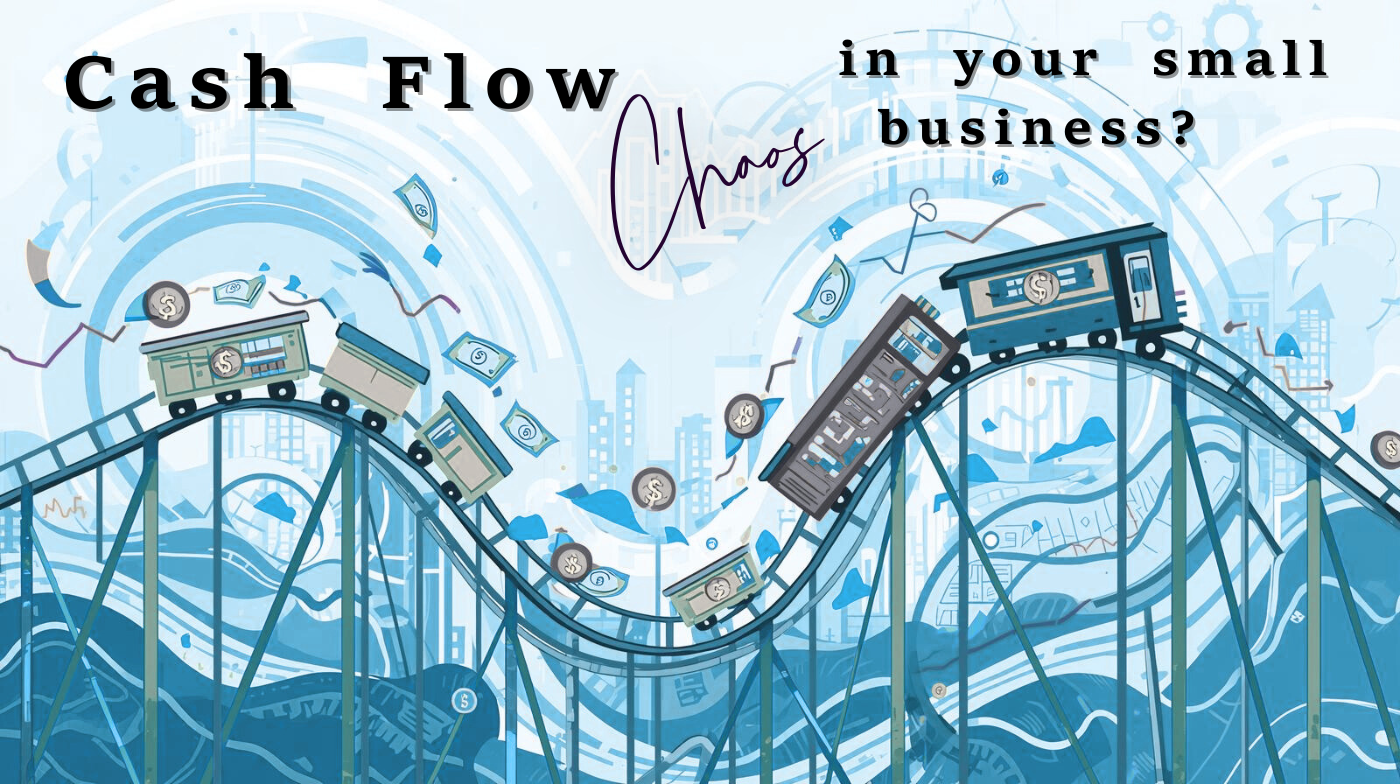
Ever feel like your business’s bank account is on a wild amusement park ride? One month, you’re flush with cash. The next, you’re scrambling to cover payroll. This financial rollercoaster isn’t just stressful—it’s dangerous.
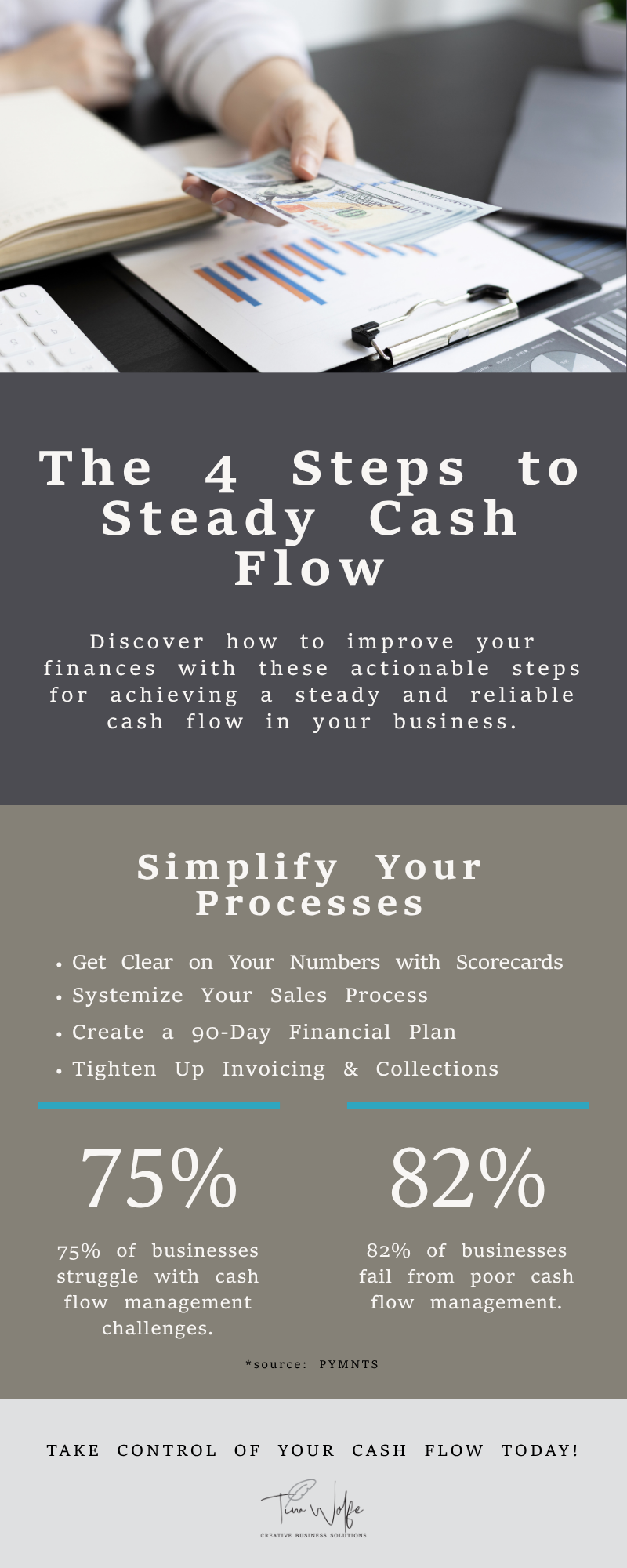
According to the U.S. Chamber of Commerce and SCORE, 82% of small businesses will fail because of cash flow problems!
Don’t panic just yet. There is hope of stepping off the highs and lows of the crazy cash ride, and you’ll be relieved to know that it’s simple.
When I started my current coaching business, I implemented the Entrepreneurial Operating System (EOS) because it aligned perfectly with how I ran my own business through the years. It also fits perfectly with my coaching program for small businesses, so it made sense.
The EOS structure gives business owners the tools to create stability, predictability, and control.
Check out the short video below to see what it’s about:
Let’s break down why cash flow chaos happens and how to fix it.
The Root of the Rollercoaster: Why Cash Flow Feels Out of Control
Inconsistent revenue isn’t always about sales—it’s about systems. Many small business owners focus on revenue generation but overlook the operational structures that ensure money flows consistently.
Here are three major reasons small businesses face cash flow chaos:
Lack of a Predictable Sales Pipeline—If your revenue is unpredictable, so is your cash flow. Without a system to generate leads and close sales consistently, income fluctuates wildly.
Poor Financial Forecasting—Many small business owners operate reactively instead of proactively, failing to plan for slow months or unexpected expenses.
Inefficient Invoicing and Collections—Late payments, unclear billing terms, and neglected follow-ups create unnecessary cash flow crunches.
Sound familiar?
One of my clients, Michele, a public relations consultant, was constantly stressed about cash flow. Some months, she had more money than she knew what to do with; other months, she barely scraped by. She was operating without a structured plan, reacting instead of leading.
Through my Purpose to Profit Mastery Program, we implemented key EOS principles to stabilize her cash flow.
Let’s get into these solutions.
The EOS Approach to Cash Flow Stability
EOS provides a proven framework for turning cash flow chaos into predictability. I’ve been using this system for three years now, and it’s brought so much clarity and focus for me. Here’s how:
1. Get Clear on Your Numbers with Scorecards
EOS teaches business owners to track key metrics weekly—and cash flow should be one of them. If you don’t know where your money is going or when it’s coming in, you can’t control it.
🔹 Fix it: Create a cash flow scorecard that tracks:
Weekly revenue
Outstanding invoices
Accounts payable
Cash reserves
Michele implemented this and immediately spotted patterns in her business. She saw when clients were most likely to delay payments and adjusted her invoicing terms accordingly.
2. Systemize Your Sales Process
The best way to fix inconsistent cash flow? Predictable sales. EOS emphasizes documenting and optimizing your sales pipeline so that revenue is steady, not sporadic.
🔹 Fix it:
Define your ideal client and ensure marketing speaks directly to them.
Implement a lead nurturing process using automation.
Create a simple, repeatable sales system with clear steps.
One of my other clients, Tom, a home contractor, relied on word-of-mouth for sales. Some months were booming; others were dead. After systemizing his lead generation and follow-up processes, he saw a 40% increase in steady monthly revenue.

According to pymnts.com
83% of small businesses say they want embedded financial services through their everyday platform services.
3. Create a 90-Day Financial Plan
Instead of reacting to money problems, predict and prevent them. EOS focuses on quarterly planning—and your finances need the same approach.
🔹 Fix it:
Review your past 12 months of income and expenses.
Identify slow seasons and create a buffer fund to cover them.
Set quarterly revenue and expense targets so you’re never caught off guard.
4. Tighten Up Invoicing & Collections
One of the easiest ways to improve cash flow is to get paid faster.
🔹 Fix it:
Automate invoices with clear terms (Net-15 instead of Net-30).
Offer incentives for early payments and penalties for late ones.
Set up recurring billing for clients who need ongoing services.
Final Thoughts: Take Control of Your Cash Flow
Cash flow problems in small businesses don’t have to be a rollercoaster ride. With the right systems, scorecards, and strategy, you can stabilize your income, reduce stress, and confidently plan for the future.
If cash flow chaos is giving you anxiety, let’s fix it together. Book a free strategy call today, and let’s get your business on solid ground.